Notes from building the filing layer for financial AI
Benchmarks, case studies, and engineering notes on turning SEC filings into structured, evidence-linked data that models can retrieve, cite, and trust.
How Lucy Built a Source-of-Truth Retrieval Layer for 2.8M+ SEC and DART Filings with Qdrant
Lucy RAG runs hybrid, filter-constrained retrieval on Qdrant, reaching 94.7% Recall@10 on FinanceBench and lifting answer accuracy by 0.160 on a fixed model.
- 94.7%
- Recall@10 on FinanceBench
- +0.160
- Answer accuracy, same model
- 2.8M+
- Filings indexed
Originally published on the Qdrant blog
Latest
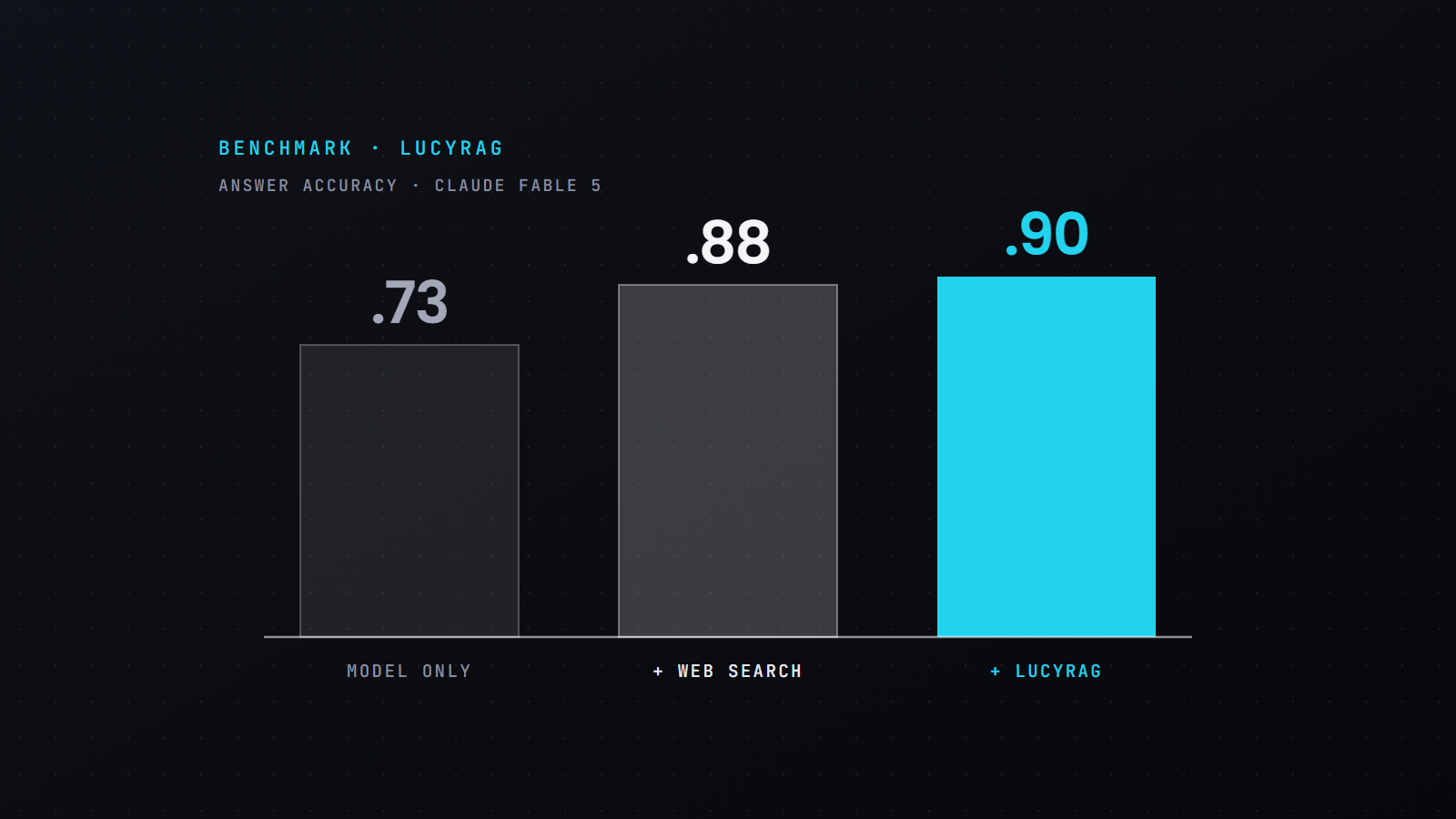
The answer is in the filing. LUCY hands it to the model.
Evaluated on FinQABench, FinanceBench, and recent SEC filings, LucyRAG matched or beat web search on answer correctness.
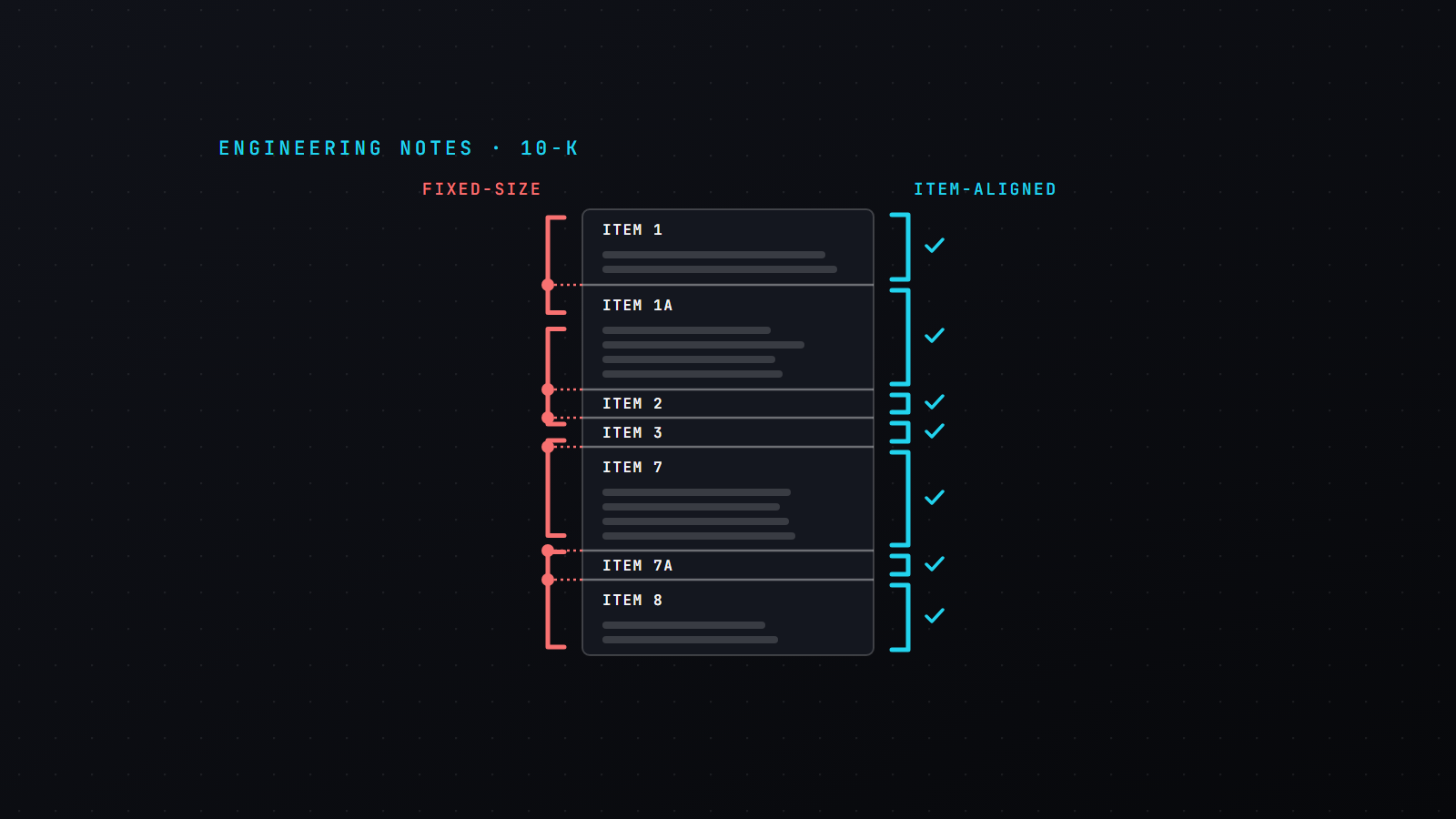
Reducing RAG Hallucinations in SEC 10-K Data: Why Item Separation Is So Hard
10-K filings have no standard format: Items go missing or out of order, titles split across HTML tags, and labels carry typos like "ITEM G15". Chunks that ignore Item boundaries raise hallucination rates.
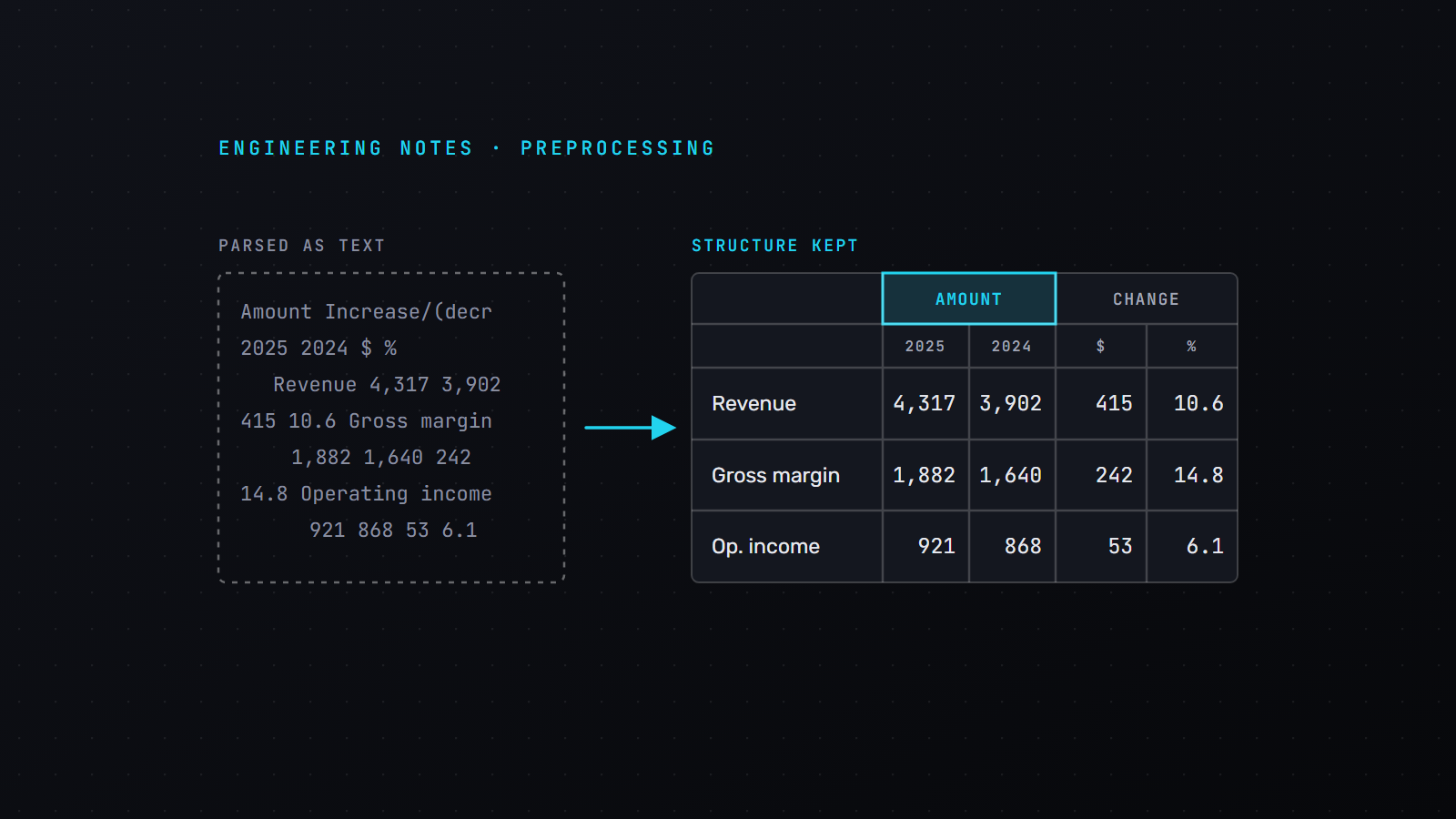
RAG Performance Starts with Preprocessing, Not Retrieval
Standard parsers flatten 10-K financial tables and lose what each number means. Preserving row-column structure as JSON improved both precision and recall over raw HTML in controlled tests.
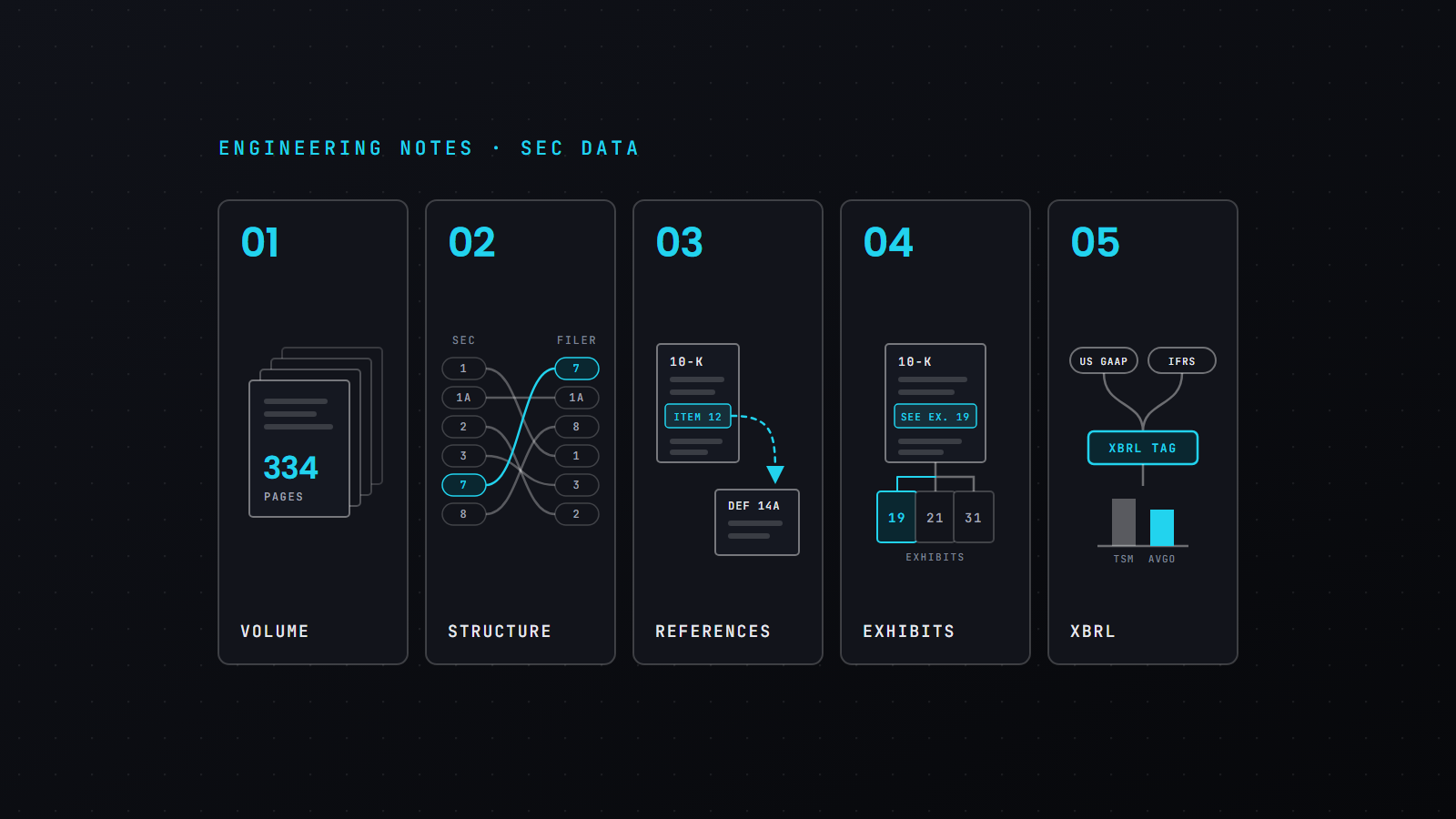
5 Reasons Why SEC Data Is So Hard for RAG Engineers
Sheer volume (6,600 10-Ks a year, 334-page filings), inconsistent section structures, Items that only point to proxy statements, policies buried in Exhibits, and XBRL across accounting standards.
Test Lucy on your own tickers
Send us the companies and questions you care about. We will run them against Lucy and share the results with the source filing behind every answer.