Reducing RAG Hallucinations in SEC 10-K Data: Why Item Separation Is So Hard
Originally published on Medium
SEC 10-K filings are organized by Items defined by the SEC. For example, Item 1 is Business, Item 1A is Risk Factors, Item 7 is Management’s Discussion and Analysis, and so on. Each Item must contain specific content as required by SEC rules.
When feeding 10-K data into a RAG, the ideal approach is to separate the document by Item. This requires preprocessing. The problem is that this preprocessing is difficult.
If you skip Item separation and feed the raw HTML document directly, chunks will not align with Item boundaries. This increases hallucination rates. We tested both approaches — Item-separated data versus raw HTML — and found significant differences in precision and recall. But I want to explain why Item separation is so difficult from a developer’s perspective.
Problem 1: No Standardized Document Format
The biggest reason item separation is hard: 10-K documents have no standardized format. The SEC defines which items must be included in a filing, but it does not specify how the document should be formatted. As a result, every company writes their 10-K differently.
This variation makes regex-based item detection unreliable. Consider the string “Item 1. Business”. This could be the actual start of Item 1 content. It could also be a line in the table of contents. Or it could be repeated text in headers or footers throughout the document.
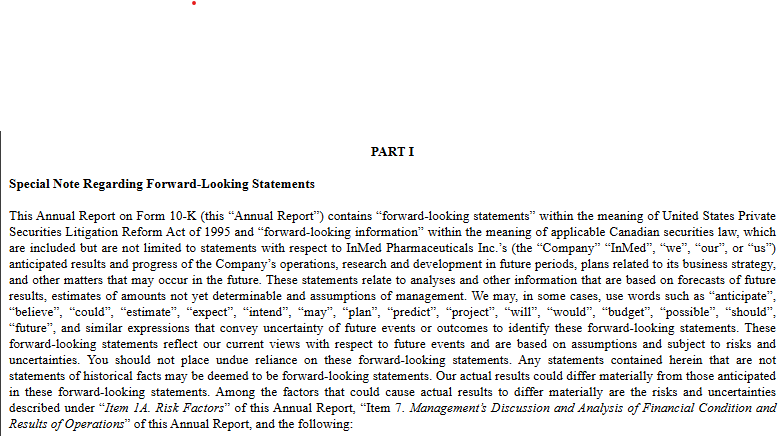
Because document styles vary so much, tightening your detection rules causes you to miss edge cases. Loosening your rules also causes you to miss cases, just different ones. Neither approach achieves reliable separation.
Problem 2: Items That Do Not Exist
Some 10-K filings do not contain certain items. In some cases, the company explicitly states “Not applicable” or “None” for an item. In other cases, the item simply does not appear in the document at all.
This creates an ambiguity problem for automated parsing. When your parser does not find an item, you cannot tell whether the item genuinely does not exist or whether your parser failed to detect it. Without manual verification of every document, you cannot be certain which case applies.
Problem 3: HTML Structure Fragments Item Titles
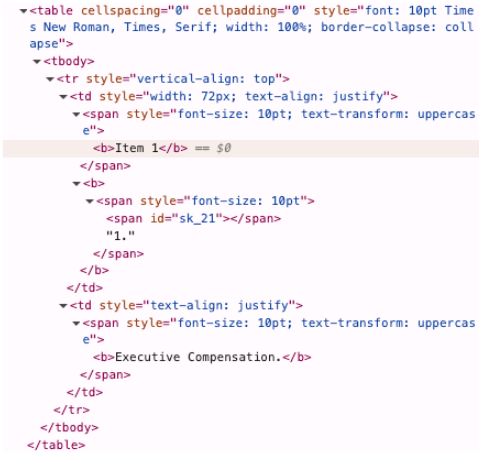
HTML structure makes item detection harder. An item title like “Item 11. Executive Compensation” may not exist as a single string in the HTML. Instead, it may be split across multiple tags: “Item 1” in one tag, “1.” in another tag, and “Executive Compensation” in a third tag.
When item titles are fragmented across HTML elements, simple string matching fails. You need to reconstruct the full title by combining text from multiple elements, which adds complexity and introduces new failure modes.
Problem 4: Typos in Item Labels
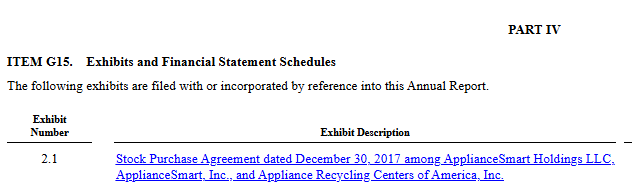
Some filings contain typos in item labels. We have seen documents with “ITEM G15. Exhibits and Financial Statement Schedules” instead of “Item 15”. A regex looking for “Item 15” treats “ITEM G15” as a completely different string and fails to match.
Problem 5: Many Other Edge Cases
Beyond the problems above, 10-K documents have many other edge cases:
- Non-standard HTML that does not follow W3C specifications
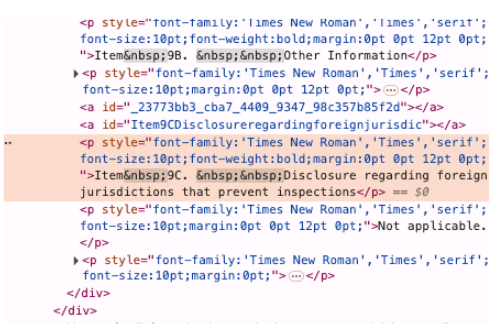
- Mixed use of regular spaces and HTML non-breaking spaces ( )
- Items appearing out of order (Item 8 before item 7, for example)
- Documents that do not organize content by item at all
With so many variations, adding a rule to handle one case often breaks another case. Rule-based approaches become increasingly complex. Maintenance costs grow rapidly. Automated methods alone cannot achieve reliable item detection. Without full manual verification, you cannot have complete confidence in the results.
Why Item Separation Matters for RAG
Despite these difficulties, item separation is necessary for RAG. A 10-K that is not separated by item is just a long block of text with no clear structure. RAG systems struggle to understand it. Chunking does not align with semantic boundaries. Retrieval pulls irrelevant content. Generation produces hallucinations.
A 10-K that is accurately separated by each item is structured data. RAG systems can retrieve the specific Item relevant to a query. Hallucinations decrease. Precision and recall improve.
How LucyData Solves This
LucyData built proprietary technology to reliably separate items, accounting for all the problems described above. Our system handles the variation in company writing styles, the fragmented HTML structures, the typos, and the edge cases.
The result is 10-K data that is cleanly structured by item and ready for RAG pipelines. Engineers do not need to build and maintain their own Item separation logic. They do not need to handle the endless edge cases. They get structured data that works.
Conclusion
Separating 10-K documents by item is not a simple preprocessing task. It is a core requirement for making financial documents usable in RAG systems. It is also one of the hardest problems in SEC data processing.
If you are building a financial RAG system and struggling with 10-K parsing, contact us.